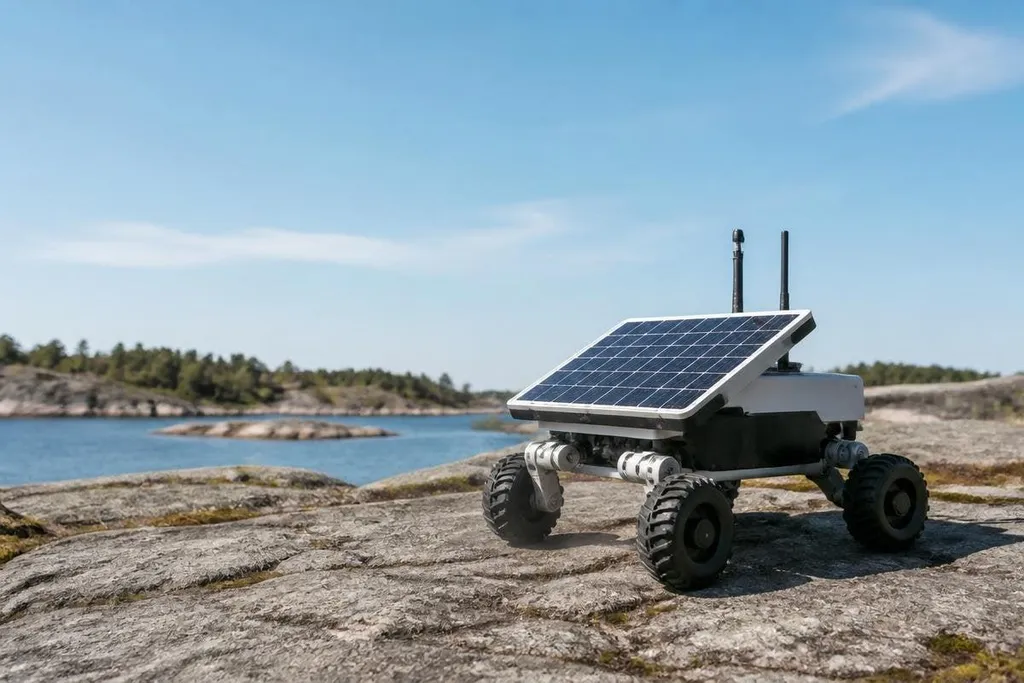
A robot can draw power from sunlight, vibration, heat, radio waves, or moving air and water. The useful question is not whether a robot can collect energy, but whether the supply matches the work it must do.
Quick read
- Solar cells suit robots that spend time outdoors or near strong indoor lighting.
- Vibration and heat can keep sensors running, but they rarely power heavy movement.
- Energy harvesting works best when the robot sleeps, measures, and moves in short bursts.
Where the energy comes from
Solar power is the easiest method to understand. Photovoltaic cells turn light into electricity, so a robot with a clear view of the sky can recharge while it waits or travels.
Clouds, shade, dust, and indoor lighting reduce the available power, which makes solar a poor fit for a robot that must work at night or under a roof.
Heat offers another route. A thermoelectric generator creates electricity when one side is warmer than the other. A steady temperature difference, such as a hot motor beside cooler air, is required. A warm room alone does little. Without that difference, there is no useful flow of energy through the generator.
Motion can help too. Piezoelectric materials produce electrical charge when they bend or are pressed. Small generators can also turn repeated vibration into power. A machine mounted on a motor, vehicle, bridge, or rail line may have enough motion to run a sensor or send a short wireless message.
Moving water and air follow the same basic idea. A small turbine can draw energy from a current or airflow, but the added drag matters. The robot may spend more energy pushing through the flow than the turbine returns unless the system is designed around that movement.
Radio-frequency harvesting takes power from nearby transmitters. The energy arrives through the air, but the amount is low and depends on distance, antenna position, and the strength of the signal. It can suit a sensor that wakes for a brief measurement. It won't replace a battery for an arm, wheel, or flying platform.
What the robot can actually do
Energy harvesting changes the robot's duty cycle. A duty cycle is the share of time a machine spends working rather than waiting or charging. A sensor may sleep for minutes, wake to measure temperature, store the reading, and transmit it before returning to sleep.
That pattern gives harvested energy time to build in a capacitor or rechargeable battery. The storage part matters because the source may be weak and uneven. A solar panel can gather power for hours before the robot spends it during a short radio transmission.
Movement costs more than sensing. Motors must overcome weight, friction, and terrain, while a processor and radio can run at much lower power. I'd use harvested energy first for monitoring, not for continuous locomotion.
The design also has to avoid wasting the power it collects. A converter changes the source voltage into a form the electronics can use, but each conversion loses some energy. Sleep modes, short radio messages, and careful timing can matter as much as the generator.
A harvested-energy claim needs the source, output, and test conditions named. Reports from Robot24 can put those figures beside the robot’s task and power draw, which is where the limits start to show.
The limits engineers must measure
The source may disappear at the wrong time. A solar robot can enter shade, a vibration-powered sensor can sit still, and a heat generator can lose its temperature difference when a motor shuts down. The storage system must cover those gaps or the robot will stop collecting data.
Size creates another limit. A larger panel, battery, turbine, or heat sink adds mass and takes space. That weight can raise the energy needed for movement, leaving less power for the task the generator was meant to support.
Safety also matters near machinery, people, and water. A turbine can add moving parts, a hot surface can damage a sensor, and a battery still needs protection from overcharging and high temperature. Energy gathered for free can carry a real hardware cost.
There is also a control problem. Its control system has to decide when to work, when to wait, and when to save power. A useful system measures its stored energy and changes its task before the battery reaches an unsafe level.
A practical decision guide
Before choosing an energy-harvesting system, check these points:
- Name the task: Decide whether the robot needs to sense, communicate, move, or run an actuator.
- Measure the source: Record light, heat, vibration, airflow, or radio strength at the real work site.
- Track the gaps: Check how long the source disappears and size storage for that period.
- Count conversion losses: Include the power used by regulators, charging circuits, and control electronics.
- Test the added mass: Compare the generator and storage weight with the energy needed to carry them.
The best fit is often a robot that works in short bursts and spends long periods waiting. For heavy mobile robots, harvested energy may reduce charging needs, but a battery or wired supply will still handle most of the work.